
Understanding the Science of Preservatives in Injectable Solutions
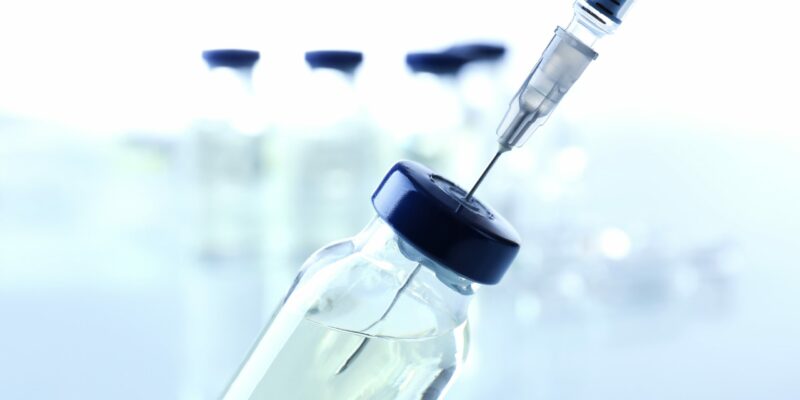
Most people who perform the procedure of self-injection of prescribed medications know the basic principle – to reconstitute powder medication with a diluent. However, fewer patients, and some physicians themselves, recognize the importance of the choice of optimal diluent and the role of the preservative in the vial cap.
Bacteriostatic Water vs. Sterile Water for Injection
The two products look similar. They are both clear, presented in vials, and have “water for injection” printed somewhere on the label. But there is a difference: one product has an additional ingredient – benzyl alcohol.
Bacteriostatic water consists of 0.9% of benzyl alcohol. Sterile Water for Injection (SWFI) is sterilized water only. And the difference in ingredients makes the usage of each different.
SWFI is the single-dose diluent. Once you open the vial, use the product and throw away the excess. It contains no preservative, and thus, any kind of contamination introduced to the vial through the needle puncture would spread uncontrollably. On the other hand, bacteriostatic water is created specifically for multi-dose vials (MDVs) – vials you access over days or weeks. And the benzyl alcohol is what makes it safe.
How benzyl alcohol works
The benzyl alcohol is the bacteriostatic agent – or, simply speaking, an agent that prevents the bacteria from growth, and not kill them. This fact makes the benzyl alcohol different from the bactericidal agents. Benzyl alcohol interferes with the process of protein synthesis in bacteria and cell division. Under appropriate conditions (for example, inside the closed vial with the use of aseptic technique), natural bacteria die off faster than multiply. Thus, this solution becomes clinically safe for usage again.
And the reason why benzyl alcohol became the preservative of choice for injectable diluents is its property not to interact with the active pharmaceutical ingredient being dissolved. The preservative affects only the biology of bacteria but not the chemistry of peptides or hormones. This compatibility (and not antimicrobial efficiency) was the key factor in choosing the agent. The preservative in bacteriostatic water you buy has its own job.
When benzyl alcohol is dangerous
While many sources do not mention it, this information is crucial.
Benzyl alcohol is completely forbidden in neonates. In the case of infant patients, the immature liver is unable to metabolize benzyl alcohol at the required pace, and the substance accumulates. This results in the development of the so-called gasping syndrome, which is the progressive, lethal toxicity causing metabolic acidosis, respiratory failure and cardiovascular collapse. This is not a theoretical case; it is a well-known clinical condition and bacteriostatic water should not be used in any preparation intended for newborns or premature infants.
With the exception of the neonatal cases, benzyl alcohol should not be used for intrathecal and epidural injections. The CNS cannot tolerate any concentration of the benzyl alcohol. The injectable drugs used in the spinal spaces should contain preservative-free SWFI or another approved alternative.
In adults patients, subcutaneous and intramuscular injections performed by a physician are allowed; however, in the cases of doubt about the route of administration, a pharmacist should be consulted prior to reconstitution.
The 28-day rule and beyond-use dating
According to the US Pharmacopeia General Chapter and CDC guidelines, once a multi-dose vial is punctured, it has the beyond-use date (BUD) of 28 days unless the manufacturer specifies otherwise.
This “28-day rule” is easy to remember and easy to use since it does not matter what quantity of solution is left in the vial. If it is a multi-dose vial and it is being used for administration to a patient, this vial with 25 mL of its 30 mL must be thrown away after 28 days. Every additional needle entry through the septum (rubber stopper) of the vial introduces the contamination risk incrementally. Despite the fact that the preservative does its work, the cumulative contamination becomes too much for benzyl alcohol to keep under control. The 28-day rule is the maximum period determined by tested performance, not the arbitrary one. Don’t guess the dates when vials are opened and entered; write the date on the vial label.
Reading labels before you reconstitute
Medicine bottle labels contain important information, which is not commonly read by most patients. But before you reconstitute any vial of injectable medication, you should lock three things: the diluent specified in the label, the volume of the diluent to be added, and whether your vial is compatible with the prescription.
The fact that the bottles of medicine may not be compatible with each other is not only possible, it is rather common. Certain substances are precipitated or broken down with the mixture with certain diluents. Other medicines require precise pH environment, maintained by the manufacturer-specified diluent only. Using SWFI instead of bacteriostatic water, or vice versa, could cause degradation of your medicine in a way invisible to eye; the solution could remain clear while its pharmacologic activity would be significantly decreased.
Aseptic technique is a must
The function of the preservative in bacteriostatic water is to preserve sterility between administrations. It does not mean that you could use unsafe technique in order to perform it.
Before every needle entry wipe the septum of the vial with an isopropyl alcohol swab and let it dry. Don’t touch the needle. Don’t leave the vial open. The reconstituted solutions should be stored according to the temperature recommended by the manufacturer, and for practical reasons, consider that any deviation from the manufacturer’s storage instructions decreases the use-life of the product regardless of BUD.