
Rehan Azhar’s Next Chapter: From Healthcare Exit to Political Engagement
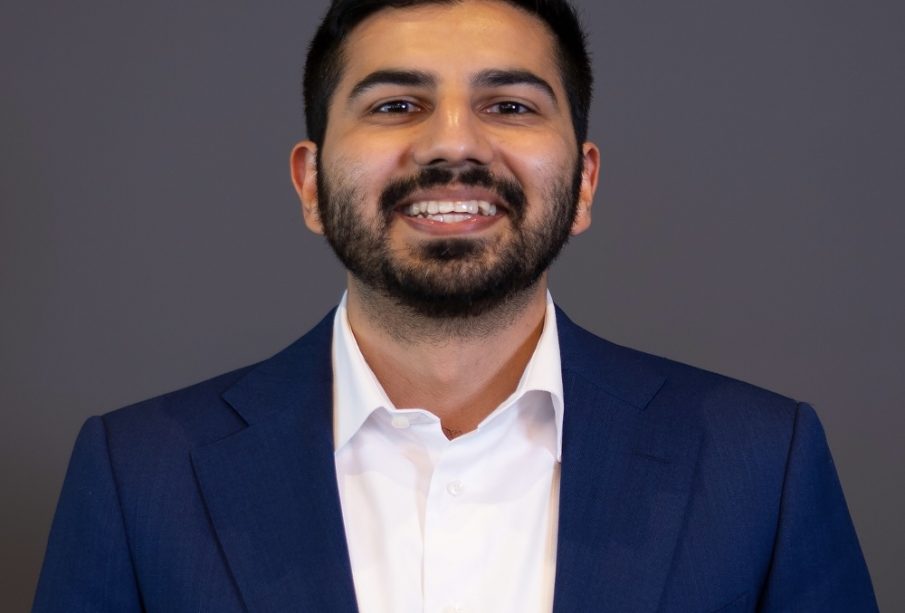
After achieving a successful exit from Comprehensive Rehab Consultants in just 39 months, Rehan Azhar faces questions familiar to many entrepreneurs post-exit: what comes next? His recent political engagement and contemplation of public service suggest answers that extend far beyond another business venture.
The Post-Exit Identity Crisis
Rehan Azhar has been remarkably candid about the psychological challenges following CRC’s sale to York Private Equity. “Particularly after the exit event, you fall into this depressive state, or at least I did, of what do I do with my life?” he revealed.
This honesty about post-exit depression challenges the narrative that successful exits represent pure triumph. While Azhar achieved the financial outcome most entrepreneurs dream of, the experience brought unexpected emotional challenges.
“As the company matures and grows, it needs you less and less, just like a kid needs their parent less and less, and you feel this emptiness and this sadness of, wait, this is bigger than me now and I’m not as important,” he explained. The transition from indispensable founder to board member advising a company run by others requires complete identity recalibration.
For entrepreneurs whose entire adult lives have been consumed by building their companies, exits create voids that money can’t fill. The daily adrenaline, the sense of purpose, the satisfaction of building something—all disappear or diminish dramatically.
Redefining Success: From Net Worth to Health, Relationships, and Faith
The post-exit period forced Azhar to reconsider how he defined success. “When I first started, I defined success by title and net worth,” he noted. “I used to have a net worth tracker. I wanted to hit certain goals by the time I was 30.”
This goal-oriented approach—common among ambitious professionals—created clear metrics for progress. Did your net worth increase? Did you get promoted? Success felt measurable and concrete.
Post-exit, with financial security achieved, those metrics lost meaning. “Now I define success by health, by relationships and by faith. Those are the three things that you’ll carry with you in life and beyond,” Azhar explained.
This evolution reflects a maturation many people experience, though Azhar reached it earlier than most. “On your deathbed, you won’t look at your savings account. You’ll look back to what are your memories and what brings you happiness?”
The new framework emphasizes sustainability and meaning over accumulation. Physical and mental health enable long-term wellbeing. Deep relationships create the support systems and connections that bring life satisfaction. Faith provides purpose and framework for making sense of experiences.
The Political Awakening: Zohran Mamdani and Representation
Rehan Azhar’s first political contribution—$151,000 to support Zohran Mamdani’s NYC mayoral campaign—represented more than writing a check. It marked entry into a new realm of engagement focused on systemic change rather than individual or organizational impact.
“I’ve never given to any politician let alone PAC in my life. This is my first time,” Azhar told the PAC director, who was stunned that a first-time donor would contribute so substantially. The decision reflected conviction rather than gradual involvement in politics.
What drew him to Mamdani? Authentic representation combined with policy focus. “He was unapologetic about his culture and his background. He didn’t shy away from it, but he also didn’t really dive into identity politics and both really meant a lot to me,” Azhar explained.
As a Muslim American, Azhar had never seen someone who looked like him run for major office successfully. Mamdani’s campaign demonstrated that minority candidates could compete and win without either hiding their identities or making identity their sole platform.
The 24-hour fundraising sprint that raised $550,000—40% of the total PAC funds—demonstrated Azhar’s ability to mobilize networks built over years in business. “I don’t really ask for favors, but this was a moment in time to do so,” he explained of the intensive calling and texting campaign.
Contemplating His Own Run: The Entrepreneur as Politician
The Mamdani experience sparked serious consideration of Azhar’s own political future. “It is something that I have considered significantly given some recent events,” he noted when asked about running for office.
His interest isn’t new. “I’ve always on many of my dating app profiles in the past, I’ve put, I want to run for city or state politics. Being mayor of my local city where I grew up, I think there’s so much that can be done.”
What appeals to him about political office? The operational challenge. “Running a small city is no different than disrupting an industry with your startup,” Azhar argued. “It’s like looking at what’s done, how can we do it better? What do people want? Let’s listen and try and figure out how we can give them what they want.”
This framing—government as startup problem—reflects his business background. Cities have customers (residents), competitors (other jurisdictions), and operational challenges around service delivery. The skills that built a successful company could theoretically improve municipal operations.
But Azhar acknowledges the distinction between governing and campaigning. “I see politics as two things. One is actually getting elected. That’s a personality involved game, but two is actually doing the job and running a city.”
The challenge isn’t operational competence—Azhar’s track record demonstrates that capability. It’s the personality-driven, retail politics required to win elections. “I’m not sure I’m ready for” that aspect, he admitted.
Working Behind the Scenes: Administration Roles
Rather than immediately pursuing elected office, Azhar considers supporting successful candidates from within administrations. “Maybe working for administration to help them achieve some of their campaign goals or some of their promises,” he suggested.
This approach leverages his operational strengths without requiring the public-facing political skills he’s less confident about. Senior administration roles—chief of staff, policy director, agency head—allow substantial influence over governance without the campaigning requirements of elected positions.
Administration roles also provide valuable experience for potential future candidacy. Understanding how government actually works, building relationships with stakeholders, and demonstrating competence in public roles create credentials that campaigns can highlight.
The ROI of Political Engagement
Azhar applies his characteristic ROI framework to political giving. “The time to give is now. The ROI is so high here. Instead of peanut butter spreading it out across 10 different campaigns, if you give it to one, you can have maybe even more outsized impact.”
This thinking extends beyond simple financial returns to social impact returns. A successful local candidate can shift policies affecting millions of people. That scale of impact is difficult to achieve through business or philanthropy alone.
The concentrated giving strategy also reflects lessons from his philanthropic evolution. Just as he moved from scattered charitable donations to focused large commitments, he approaches political giving with similar concentration.
The Muslim American Political Moment
Azhar’s political engagement occurs within a broader context of increased Muslim American political participation. As he noted in media interviews, “Muslims felt largely ignored in the presidential election. They felt seen here, they contributed.”
This sense of representation matters profoundly. When communities feel excluded from national politics, local campaigns that authentically engage them create disproportionate enthusiasm and mobilization.
Many of the significant donors to Mamdani’s campaign were in their thirties and forties—Azhar’s generation—representing new wealth and willingness to engage politically among Muslim Americans. This generational shift could reshape political dynamics in diverse urban centers.
Beyond Politics: Continued Business Engagement
Despite political interests, Azhar maintains substantial business engagement. His role as President of CRC focuses on talent, strategy, and M&A following the York Private Equity investment. This ongoing operational involvement keeps him connected to healthcare markets and allows continued impact in post-acute care.
His angel investing through AirAngels also continues, backing companies across multiple sectors. This diversification ensures he maintains exposure to startup ecosystems, emerging technologies, and entrepreneurial communities beyond healthcare.
The combination—operating role at CRC, angel investing portfolio, philanthropic activities, and political engagement—creates a diversified impact portfolio. Different activities provide different forms of satisfaction and influence, reducing dependence on any single source of purpose or meaning.
The Padel Obsession: Finding Balance
Amidst business, philanthropy, and politics, Azhar has developed a significant passion for padel, a racket sport popular internationally but still growing in the United States. “I play 10 hours a week,” he noted, acknowledging “I almost think it’s a waste of time at a certain point.”
The significant time investment in padel—playing three and a half hours in a single day—might seem frivolous for someone with ambitious goals. But it likely serves important functions: physical fitness, social connection (he’s met many friends through the sport), and mental health benefits from regular exercise.
The sport also represents being part of something in its early growth phase in the United States. “It’s kind of fun to also be part of something new and different and in the beginning phases because in five years it might be really big,” he explained.
This pattern—getting involved early in emerging phenomena—applies across his activities. He joined Airbnb during rapid growth. He entered healthcare just as tech-enabled models were proving viable. He backed Mamdani before the campaign became a national story. The padel enthusiasm fits this broader pattern of early participation in growing movements.
The “This Is Surreal” Mentality
When asked what he’d title a movie about his life, Azhar chose “This Is Surreal”—a telling choice that reveals how he processes his trajectory. “Sometimes I still don’t believe it, and it’s certainly not imposter syndrome,” he explained.
The speed of his journey partially explains this feeling. “From the day I got laid off from Airbnb… to the day we sold, the wire came in, that was 39 months. And that’s like insanely quick.”
Success achieved rapidly can feel unreal precisely because it lacks the gradual normalization that comes with longer timelines. People who build companies over a decade have time to adjust psychologically to each stage. Compressing that journey creates cognitive dissonance—one day you’re unemployed, three years later you’ve achieved a life-changing exit.
The surreal feeling also reflects coming from “a small town” without obvious entrepreneurial resources. “I watched Shark Tank from episode one, season one” as inspiration, lacking direct role models or mentors who had built companies.
What’s Next: The Open Question
Rehan Azhar’s next chapter remains genuinely open. Will he pursue elected office? Deepen administration involvement? Launch another company? Focus primarily on investing and philanthropy? Some combination of all these paths?
The uncertainty itself represents success—financial security provides options rather than necessities. He can pursue activities based on potential impact and personal fulfillment rather than pure economic calculus.
His evolving definition of success suggests that whatever path he chooses will emphasize meaning, relationships, and contribution over accumulation. The health-relationships-faith framework creates different decision criteria than the title-and-net-worth metrics that guided his twenties.
The political engagement, philanthropic sophistication, and continued business involvement all suggest someone building a diversified portfolio of impact rather than optimizing for any single dimension. This integrated approach—refusing to compartmentalize business, charity, politics, and community—may prove more influential than pure focus on any single domain.
For an entrepreneur who built and sold a healthcare company in 39 months, who raised $550,000 in 24 hours for a political candidate, and who’s developing innovative models for sustainable nonprofits, the next chapter promises to be as unexpected and impactful as what came before.