How to Plan Professional Teeth Whitening With Your Dentist
Professional whitening starts with a plan made with a dentist who knows your mouth, rather than an impulse buy. People looking into Teeth Whitening Cannington get better results when health, stain type, method, and aftercare are sorted in that order.
Start with a health check before shade talk
Many first-time patients walk in asking how white they can go. Good dentists start with a different question. They ask if whitening is safe for you right now.
The exam looks past color. It checks for untreated decay, gum inflammation, cracked teeth, and worn enamel. Recession where gums have pulled back also matters because exposed roots react differently. Each issue can let bleaching gel reach places it shouldn’t, which can mean sharp pain or extra damage that takes time to calm.
If something shows up, it gets addressed first. A filling comes before bleach, as does gum treatment when needed. A cracked tooth needs a diagnosis and repair plan before any cosmetic step is even discussed.
There’s no shortcut here. Whitening in the presence of untreated decay can aggravate sensitivity and leaves the underlying dental problem unaddressed. Whitening with active gum disease can make gums more sore and bleed more easily. Whitening on very thin enamel may not give the bright result you want because darker layers show through. It makes sense to stabilize health first rather than chase color while dental problems remain.
Think of this visit as candidacy screening. You should leave with a clear yes or not yet, plus reasons you understand well enough to explain.
Figure out why teeth look dark
Not all discoloration is the same. Your dentist will sort out if stains sit on the surface or deep inside the tooth, because that distinction shapes the whole plan.
Surface stains are extrinsic. They come from coffee, tea, red wine, and tobacco. They cling to film on enamel. A good polish can lift part of them, and bleach can address what remains.
Deep discoloration is intrinsic. Aging thins enamel so the yellow dentin beneath shows more and teeth look darker even when clean. Trauma can darken a single tooth over time, while certain medications taken early in life can leave banded marks.
The cause affects how well whitening works. Bleach works best on generalized yellowing from age and surface stain. It is less predictable on gray tones or a single dark tooth after injury. Those cases may need more sessions or a different approach, and sometimes bonding or a veneer fits better.
Be wary of promises tied to a set number of shades. Teeth don’t all start from the same base color. Two people can use the same method and end with different results because their starting points differ.
Get a professional clean first
Whitening gel can’t do its job through plaque and tartar. That is why dentists insist on a scale and polish before bleach, since skipping it dulls the result.
Plaque is soft and sticky. Tartar is hardened buildup near the gum line. Both sit on enamel along with a thin protein film called pellicle. Together they block gel from reaching the tooth surface evenly, so cleaning clears that barrier and lets the shade read true.
The clean also resets the baseline. Teeth often look a touch brighter after tartar and surface stain are removed. Your dentist isn’t guessing under buildup when shade is recorded after a fresh polish.
Some people hope at-home scrubbing can replace this step. It can’t do that. A toothbrush and paste don’t remove tartar once it has hardened, and floss doesn’t polish enamel smooth.
If gums bleed a lot during the clean, that gives the dentist useful information. It can signal inflammation that needs care before whitening moves ahead with bleach. It’s better to learn that before treatment begins.
Set a realistic target shade
Everyone brings a mental picture of white. Often it’s an edited photo. Your dentist’s job is to ground that picture in what your enamel can do.
Most practices use the Vita shade guide. It’s a set of tooth-colored tabs arranged from light to dark. Your dentist holds them next to teeth under good light and records the match. That record is your starting shade. Later comparisons use the same scale so change is measured, not guessed.
The difference between stained color and natural color is easy to overlook. Stained color can lighten well. Natural color has limits set by genetics and dentin tone. If teeth were never bright white, bleach won’t make them paper white but can lighten within their range.
Understanding that can save disappointment.
Talk openly about what bothers you. Is it overall yellow tone or one tooth that stands out? Uneven color points to a different fix than all-over dullness and may need checks for internal causes.
Ask what happens if bleach isn’t enough. Sometimes the honest answer is bonding or porcelain veneers for shape and color together. Sometimes the answer is to whiten first, then match new restorative work to the lighter shade. Knowing those paths before you start helps you understand the possible costs of further treatment.
Weigh the two dentist-supervised options
Once health and goals are clear, you can talk methods. Dentist-supervised whitening usually falls into two groups: in-chair treatment and custom take-home trays.
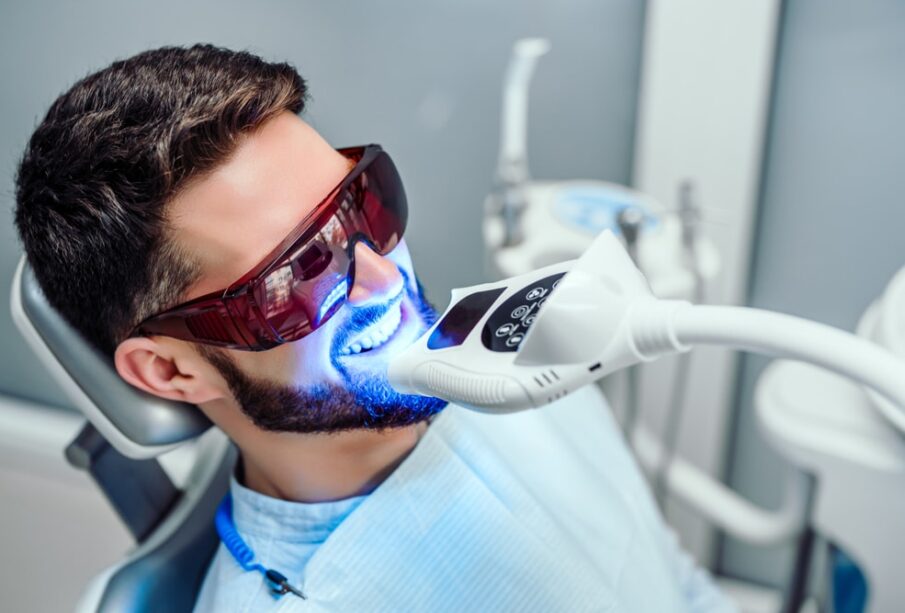
In-chair whitening happens at the practice. The dentist protects gums and lips, then applies a hydrogen peroxide gel to the teeth. Some systems, like ZOOM! chairside whitening, pair the gel with a light step during the visit, while others use gel alone with careful timing and suction. The gel does the whitening under professional supervision; the light alone does not remove stains.
Take-home whitening through a dentist is different from store kits. The dentist takes molds or scans and has trays made to fit your teeth. Treatment involves a carbamide peroxide gel that breaks down in use, with wear and review guided by the dentist. Because the fit is precise, gel stays where it should while gums see less excess.
Which fits you? Time pressure points many people toward the chair. Control and pacing point others toward trays because they prefer gradual change with review visits built in. Sensitivity history matters too, as does budget and how even stains look across the smile. A practice that provides both paths can walk through trade-offs without pushing one answer, so patients comparing time and cost can make an informed choice. For example, patients looking for dentist-led care near Perth’s southern suburbs often compare in-chair and tray choices when they arrange Teeth Whitening in Cannington through a local clinic that provides both ZOOM chairside whitening and custom-fitted take-home kits.
Strength alone isn’t a good basis for choosing treatment. In many places, stronger bleaching gels are legally limited to use by registered dental practitioners. Higher does not mean better if gums burn or enamel gets rough. Ask how the dentist protects soft tissue and what they do if teeth sting, since clear safety steps matter more than label claims.
Plan for sensitivity and existing dental work
Sensitivity gets the most questions. It’s also the most common short-term side effect, so planning for it beats reacting to it.
Peroxide can make teeth tingle or ache during and after treatment. Gums can feel tender if gel touches them. For most people that fades once treatment stops and enamel recovers with saliva and fluoride. For a few, it lingers and needs a check.
Tell your dentist if cold drinks hurt or if gums have receded. Those clues change the approach. Your dentist may discuss desensitizing toothpaste or an in-practice fluoride treatment as part of the plan. Many of those pastes use potassium nitrate or added fluoride to calm nerve response. For take-home trays, pacing is something to discuss with the dentist rather than follow a one-size rule.
Agree on a contact plan before you start. That includes knowing who to call if pain spikes and when the dentist may recommend pausing treatment for a review. Your dentist can explain what counts as normal tingling and what needs a prompt review. Clear answers prevent worry and help stop small issues from growing.
Then there is the matter of past dental work. Crowns and veneers do not lighten like natural tooth tissue. Bonding and tooth-colored fillings stay the same shade too. That mismatch can show after surrounding teeth brighten.
Your dentist should map every restoration you have. Front-tooth work matters most because it shows when you smile. Options may include accepting a slight difference or whitening first and discussing replacement of the restoration to match. In some spots the dentist may advise skipping bleach and planning a veneer instead.
Enamel remineralization deserves a mention too. After bleach, saliva and fluoride help the surface settle. Your dentist can discuss whether fluoride toothpaste and adjustments to your usual routine would help during that period. It’s not complex, but it helps teeth feel normal again.
Lock in aftercare, costs and event timing
Good results fade if aftercare is vague. Ask for steps you can follow at home without guesswork.
Right after whitening, teeth can pick up new stain more easily for a short time. Your dentist can explain which foods and drinks may need a temporary pause and when they can return. Coffee and red wine are usual suspects. Tobacco and deeply tinted sauces also come up in that talk. Managing those exposures and maintaining brushing habits can keep the new shade cleaner for longer.
Maintenance comes down to habits and review, rather than a single touch-up date. Daily brushing and regular hygiene visits both slow new stain. Floss habits matter too. If color dulls, your dentist can discuss whether a supervised touch-up suits you. No fixed promise fits everyone because diet and daily habits differ.
Get the money and paperwork clear too. Ask for a written plan that lists the total fees and what is included. It should also note extras and how shade change will be tracked. Ask about suitability limits in plain terms. If whitening may not work well on your stain type, that should be in writing before you pay.
If whitening is for an event, discuss a buffer with your dentist. Weddings, photos, travel, and job interviews all add pressure. Booking well ahead leaves room for sensitivity to settle and for review visits if shade needs fine-tuning. Your dentist can help pick a date that leaves breathing room without rushing.
Whitening looks simple from the outside. Inside the practice it’s a series of small decisions about health and the cause of discoloration, followed by method and aftercare. A plan that covers each of those points gives you a clearer idea of what treatment involves and what results to expect.