Off-the-Shelf vs Professionally Fitted Orthotic Shoes
Most orthotic shoes look much the same on the shelf, but how they were matched to your feet is what sets them apart. Off-the-shelf pairs are shaped for an average foot, while professionally fitted pairs are selected and adjusted to suit your mechanics.
What off-the-shelf orthotic shoes really are
An off-the-shelf orthotic shoe is a mass-produced shoe with pre-moulded arch support and a cushioned insole built into the design. It is made to approximate an average foot and sold in standard sizes, with no adjustment for how you walk. A professionally fitted orthotic shoe starts with your foot rather than a standard size run. It is chosen for its last and construction, then paired with a custom orthosis or insert that has been made or tuned for your mechanics. That different starting point explains much of the difference in results.
Shoppers usually come across four levels of product before they ever see a podiatrist. Pharmacy gel inserts and thin foam pads sit at the bottom, adding softness without changing alignment. Supermarket orthotic shoes sit one step up, with a firmer arch bump and a deeper heel cup, but they still use the same shape in every pair. Premium supportive footwear uses better foams such as EVA and memory foam, along with a more stable sole, so it can feel good for tired feet and light use. Prescription-fitted orthotic shoes sit at the top, combining a shoe that can be modified with a device built from a cast or 3D scan of your foot.
The materials can tell you a lot about how long the benefit may last. Memory foam feels soft in the shop because it moulds quickly, but it also compresses quickly and the support can flatten. EVA generally holds its shape longer, while a rigid shell can maintain alignment for longer still. This is why custom orthoses often combine soft top covers with firmer bases. The shoe last matters too. The last is the internal shape around which the shoe is built, and an off-the-shelf last cannot change. If your forefoot is wide and your heel is narrow, a standard pair rarely accommodates both equally well.
Why the average foot doesn’t exist
Feet do not cluster neatly around one shape. One person may have a high, rigid arch and a foot that rolls outward, while another has a low, flexible arch and a foot that rolls inward. Podiatry calls these patterns supination and pronation, and both are normal in small amounts. Problems can start when there is too much or too little motion for the joints above the foot to manage comfortably. An off-the-shelf arch bump cannot identify which pattern you have. It simply sits where the factory put it.
That potential misplacement is why arch height alone does not predict comfort. If the peak of the support sits slightly forward of your joint, it may press into soft tissue instead of supporting the foot effectively. If it sits too far back, the midfoot may get little help while the heel takes more load. Weight should spread across the heel and forefoot in a relatively smooth pattern, but a generic insole can raise pressure in one spot and leave another unsupported. People with plantar fasciitis may notice this quickly. The heel often aches in the morning, and a shoe intended to help can make those first steps feel sharper.
Your old shoes can provide clues that a size label will not. Turn them over and compare the left with the right. If one heel has worn smooth on the outer edge while the other has worn flat, your gait may not be symmetrical, and a mirrored pair of insoles may not address the difference.
Worn foam that leans to one side can be a reason to seek an assessment rather than buy another box.
What professional fitting involves in practice
A podiatric assessment starts with questions rather than shoes. Your podiatrist will ask when the pain starts and what eases it, and will check for health issues that may affect your feet or healing. We then watch how you stand and walk, because gait analysis can show details that static sizing misses. One consultation will often combine your history and gait observation with joint testing and pressure checks. This reduces the need to guess which foot requires which type of support. Each foot can have its own plan.
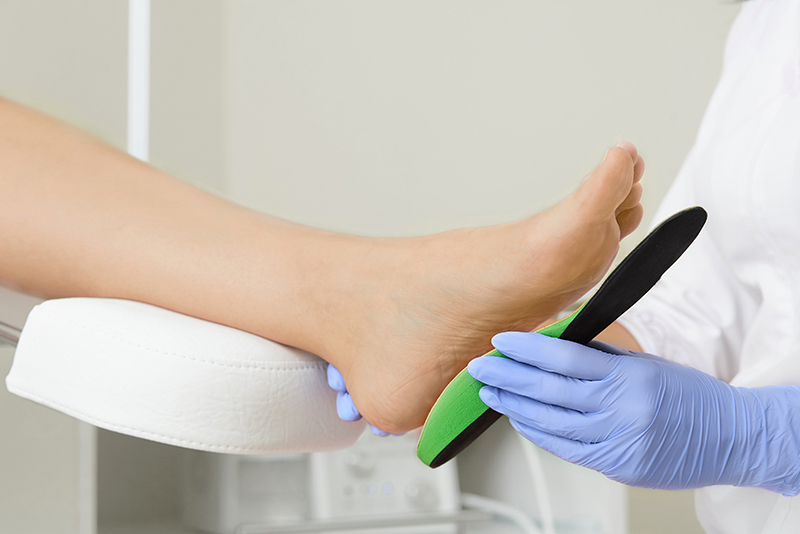
Casting or 3D scanning may come next for people who need custom devices. A scan maps width and arch shape in minutes, while a foam impression or plaster cast records the shape and position of the foot. The lab then builds the orthosis using materials selected for your weight and activity, often combining a firm shell with a cushioned cover. Trial fitting matters as much as the scan. You try the shoe with the device inside while the podiatrist checks heel grip and asks how pressure feels. Small adjustments can make a noticeable difference here.
Shoe modification may form part of the same visit when the shoe allows it. A clinic can stretch a tight area over a bunion or add wedging to alter how load is distributed. Heel lifts and padding may also be fitted to help settle the heel. These small tools can turn a good shoe into one that is better suited to the individual foot. Off-the-rack pairs do not usually come with that kind of follow-up. What is in the box is generally what you get.
People who have tried two generic pairs without relief often prefer to see fitted options in person. A clinic that fits orthotic shoes perth can explain how shoe choice and custom devices may work together.
What the price difference buys you
Off-the-shelf pairs cost less at the counter, which matters when symptoms are mild. If your feet ache after a long retail shift or a weekend walk, and the ache fades with rest, cushioning and a generic arch may be enough. Tired feet do not always require a scan. They may simply need more comfortable footwear and timely replacement before the foam packs down.
Professionally fitted shoes cost more because the price covers time and tailoring as well as materials. The consultation and device build sit within the cost, and follow-up adjustments are often part of the process. That spending can make sense when footwear needs to change how load moves through your foot. Research on custom orthoses for plantar fasciitis indicates that they can provide pain relief when the device is appropriately matched to the person, rather than merely adding softness. A podiatrist may also be able to adapt a suitable off-the-rack shoe by stretching the upper or adding wedging, so you do not always need to start from zero.
Think in terms of steps and the numbers become clearer. The average person takes roughly 8,000 to 10,000 steps per day, adding up to about 115,000 miles in a lifetime (American Podiatric Medical Association). A small pressure issue repeated that often may become more significant over time. Paying once for better plantar pressure distribution may be preferable to buying several soft pairs that leave the underlying issue unchanged. The practical question is the cost per comfortable mile, rather than whether the shoe is a luxury product.
Who should skip the shoe aisle and book an assessment
Some feet need professional input from the start. Pain that has lasted for weeks despite rest and ice may not be resolved by a softer shoe. Pain on one side only is another reason to seek advice, because generic pairs assume both feet need the same support. Diabetes changes the level of risk. Reduced sensation and slow healing can allow a blister to become serious, so therapeutic footwear with pressure relief and a careful fit may be necessary. Supermarket options are not a sensible experiment when protection matters as much as comfort.
Foot shape and steadiness matter as well. Bunions and rigid flat feet change how a shoe fits and grips, and a standard width may not accommodate both the sore area and the heel. If you regularly lose your balance on uneven ground, a stable base and a well-matched heel may matter more than soft foam. By contrast, an occasional walker with tired feet and no recurring pain pattern may do perfectly well with an off-the-shelf pair. Many people reach a stage where a supportive shoe and a shorter day are enough. Honest podiatry should acknowledge that too.
Age and workload can tip the decision. If you stand all day on hard floors and your heels throb by hour six, a fitted device designed to spread load may outlast soft foam. If you run and regularly develop knee pain afterwards, an assessment of alignment may be more useful than simply adding cushioning. Neither case calls for drama. It calls for an appropriate match.
Why buying another pair can backfire
The shoe aisle rewards hope. A new upper and fresh foam can feel like progress for a week, only for the old ache to return in the same place. That cycle may obscure the underlying issue while time passes. Heel pain that does not settle can be plantar fasciitis, but it may also reflect a stress response in bone or an irritated tendon that requires load management. Numbness and tingling can point to a different issue and warrant assessment rather than more padding.
Repeatedly walking around pain can also encourage compensation. You may shorten a step to avoid heel pain, leaving the hip to take more of the work. You might lean away from a bunion and find that the knee tracks differently. After several months, those movement patterns may be harder to address than the original sore area. An early assessment can help break the loop by identifying a likely driver instead of only cushioning the painful spot.
We see a similar pattern when sole wear goes unchecked. A runner may keep buying neutral shoes while the outer heel continues to collapse, even though wedging or a firmer post might provide more appropriate support. Money is spent and confidence falls. The foot remains sore.
A simple way to decide what to do next
Use a short checklist before paying for another pair. Does the pain linger after you stop moving and return the next morning? Is it worse on one foot, or associated with numbness or tingling? Have two generic pairs already failed to provide relief beyond two weeks? Do you feel unsteady on stairs or uneven paths? A yes to any one of these questions points towards an assessment. Two yes answers make another unassessed purchase difficult to justify.
If you tick none of those boxes, shop carefully off the shelf. Choose a stable heel cup and a roomy toe box. Walk around the shop for five minutes rather than thirty seconds. Replace the pair when the midsole becomes heavily creased or starts to lean. There is no shame in using a simple solution when the problem itself is simple.
If you tick a box, bring your old shoes to the consultation. Wear patterns and pressure marks can tell a podiatrist more than a pain score alone. You may still leave with a plan that includes an off-the-shelf shoe, but it will have been selected with the right fit and insert in mind.
Good footwear is about more than the label on the box. It should match support position and plantar pressure to the feet you have and the miles you actually walk.